This thesis uses the specific lens: “media = styles = the act of artifice” to examine the relationship between tools, technological growth, and the graphic design process. Proposing that the act of artifice is the underlying condition of graphic design’s evolution from the honesty and clarity of modernism, to the pastiche of styles and historical references that characterize postmodernism, to the uncertainties and erosion of the questions of authorship in the age of artificial intelligence. Artifice is the invisible constant of design that explains how graphic design is a semantic craft in which we interpret and transform meaning into composed, mediated forms. Consequently, the project investigates how analog vs digital & human-made vs machine-made are no longer a dichotomy today.
The project consists of two parts: a typeface and a set of type specimens, and each part is broken down into three categories: analog (print), artifice (digital), and artificial (machine). Using the same texts for all three type specimens’ contents, the project investigates how these words about media may be perceived and understood differently while type-set across various formats.
Styling Media
- Digital Design
- Web
- Coding
- Print Design
- Lettering
- Writing
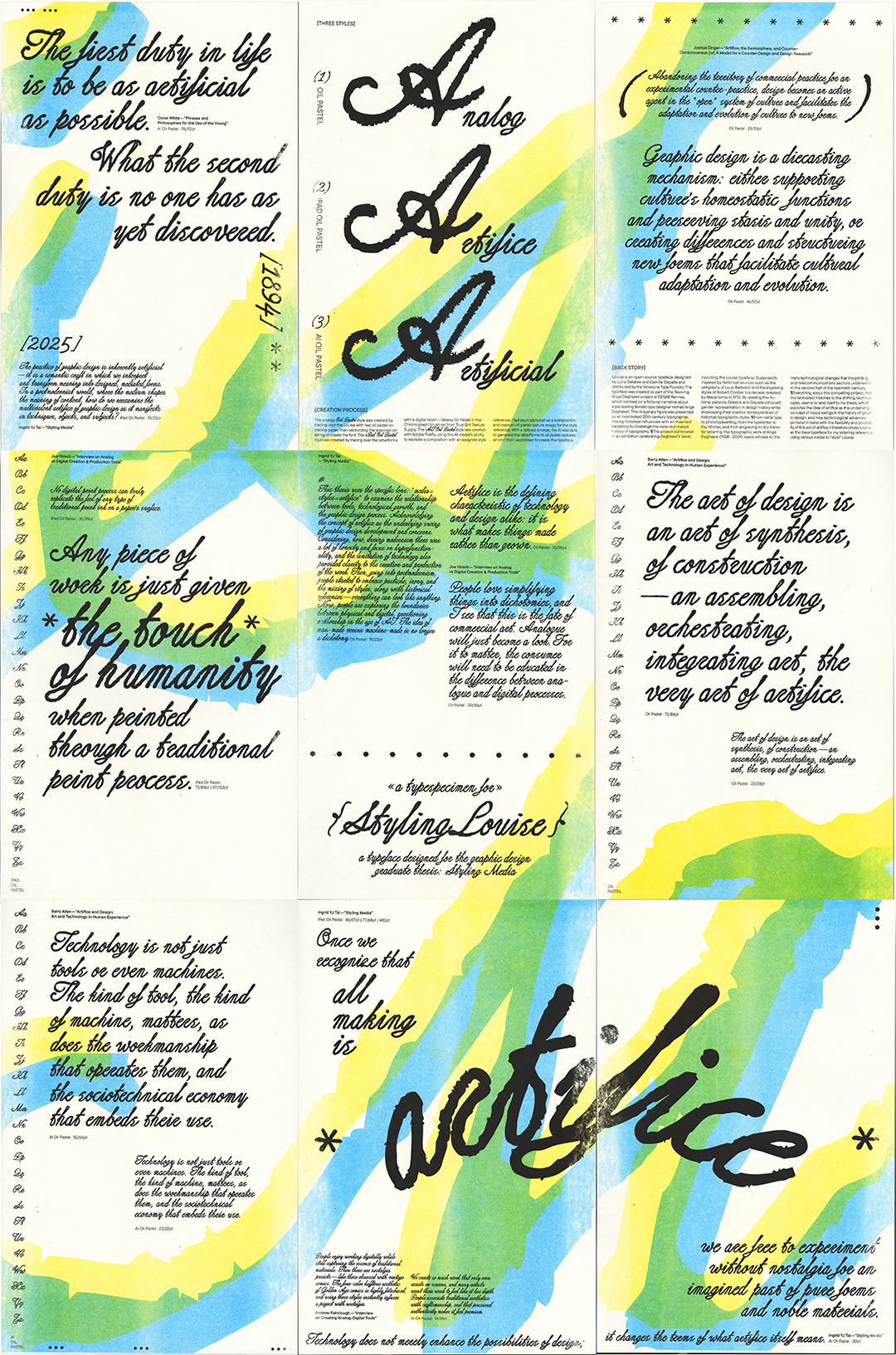
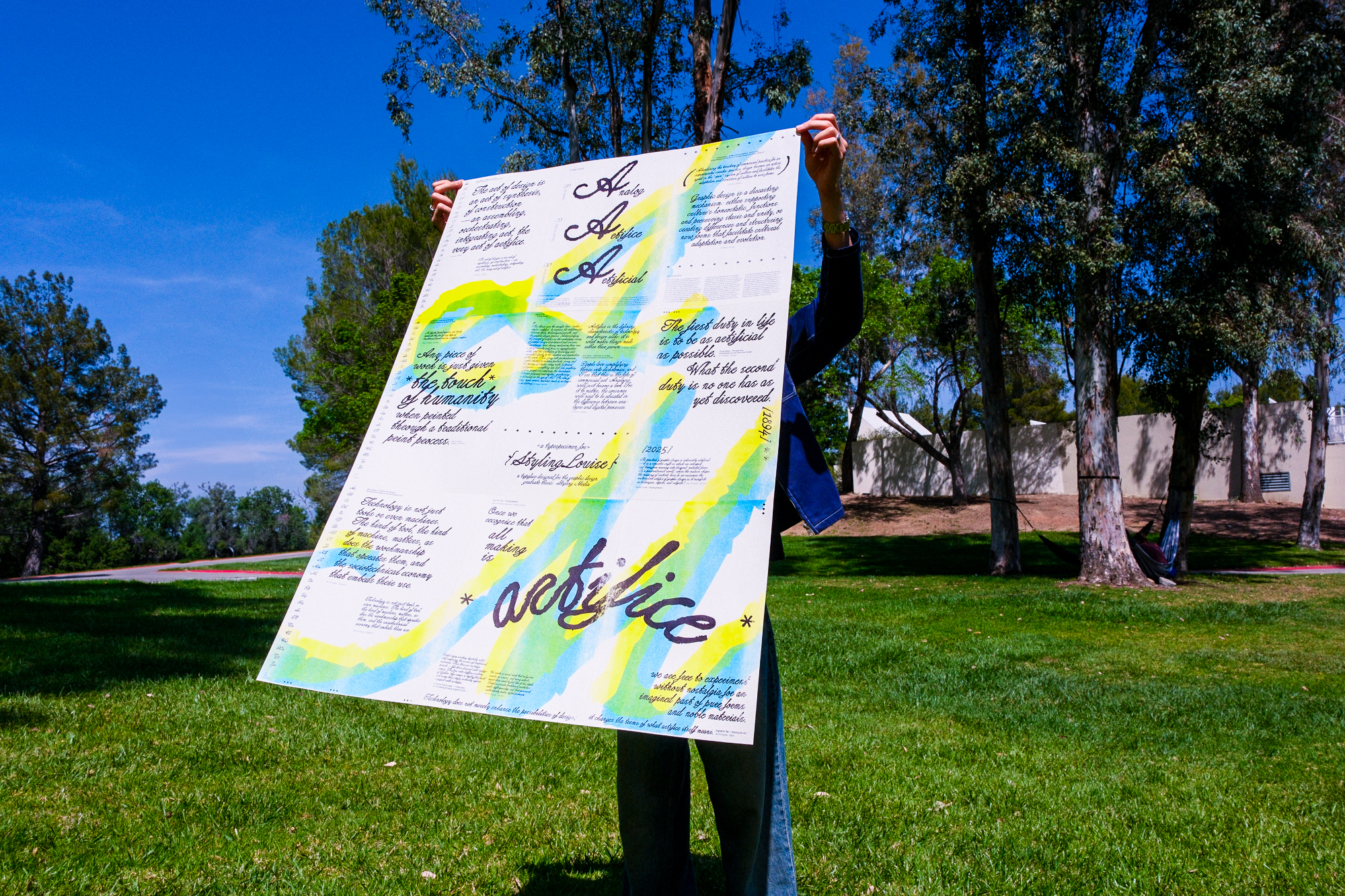
The Analog portion of the project manifested as a 3-color Risograph-printed, modular poster.
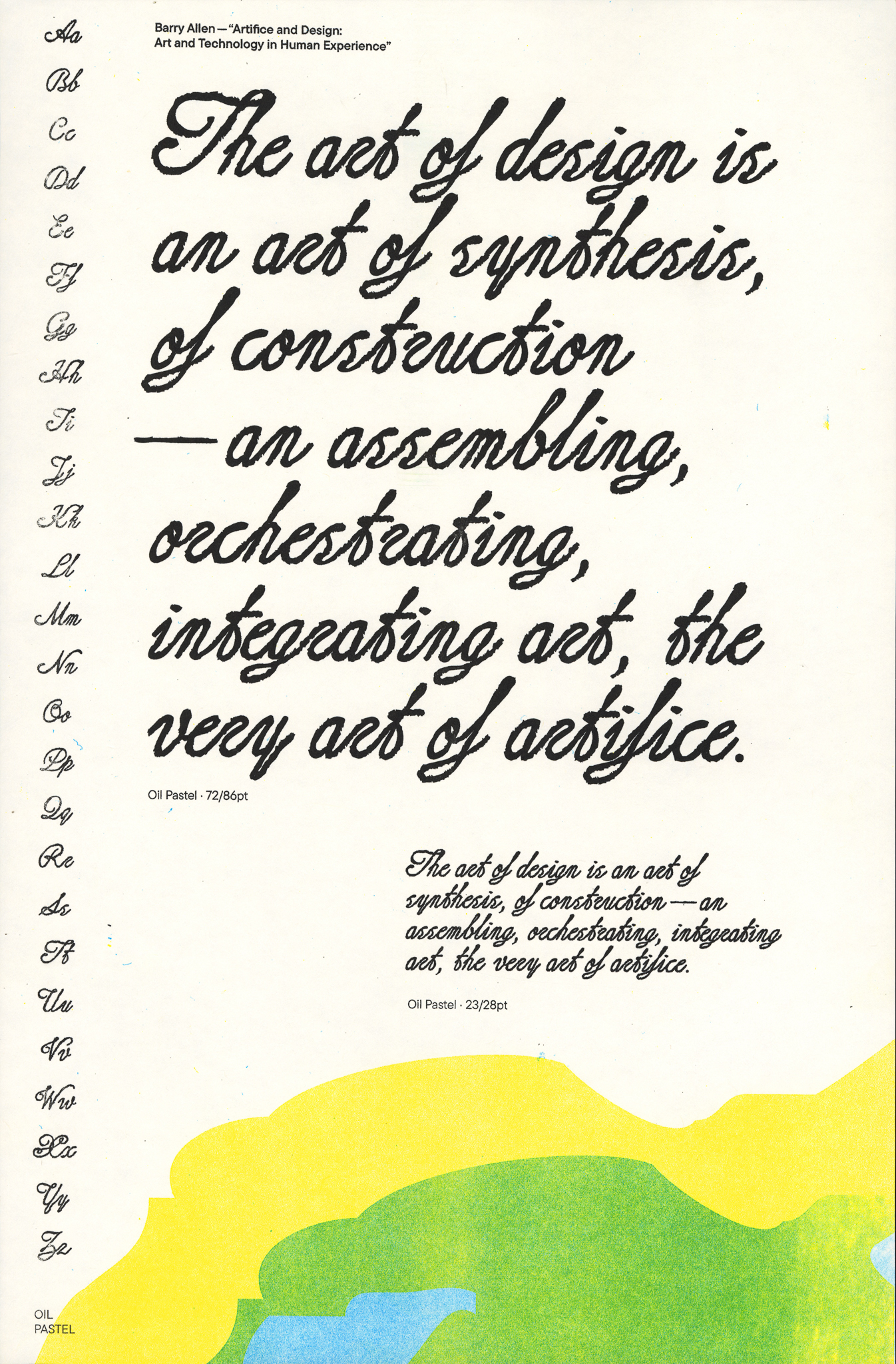
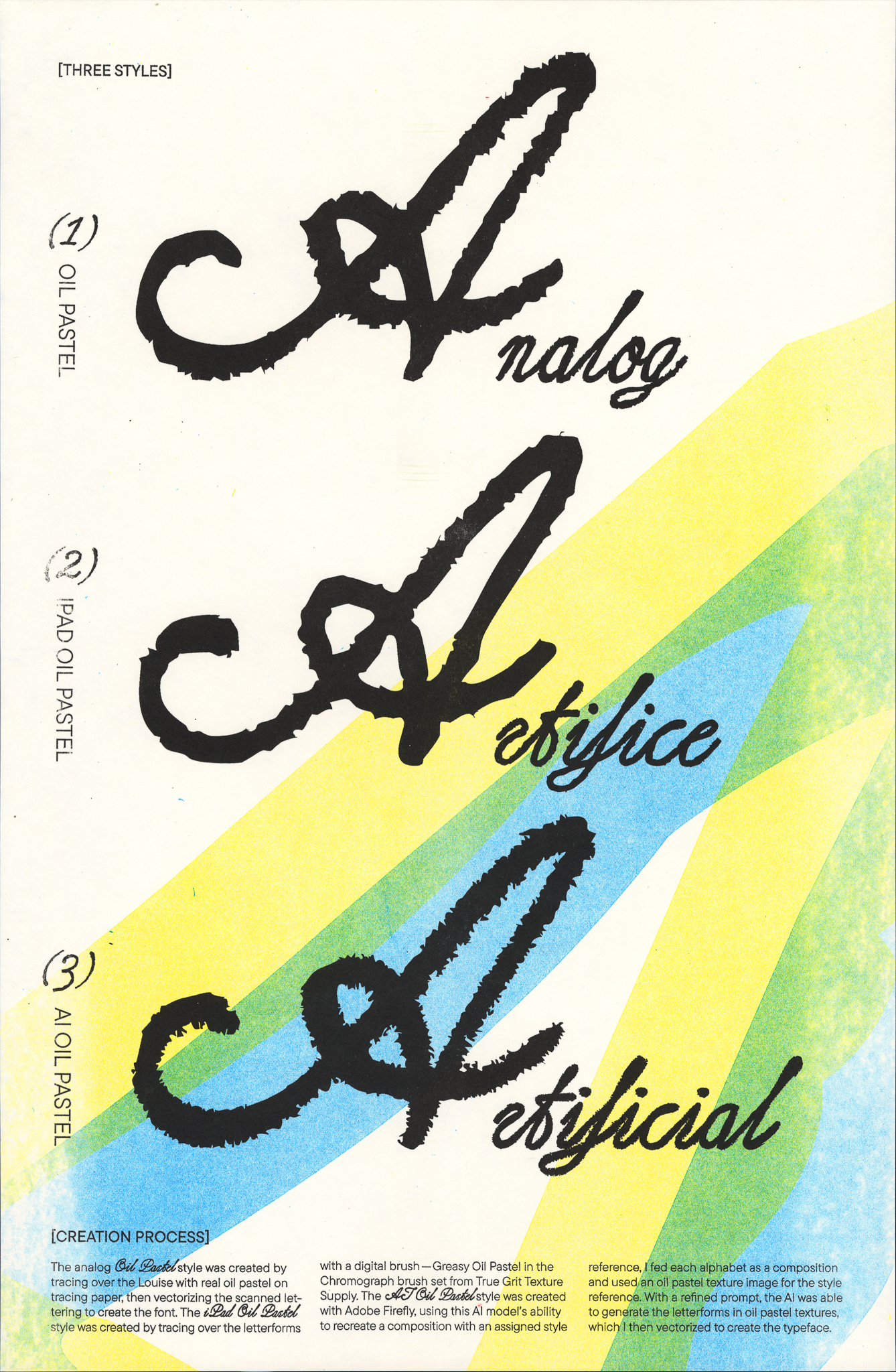
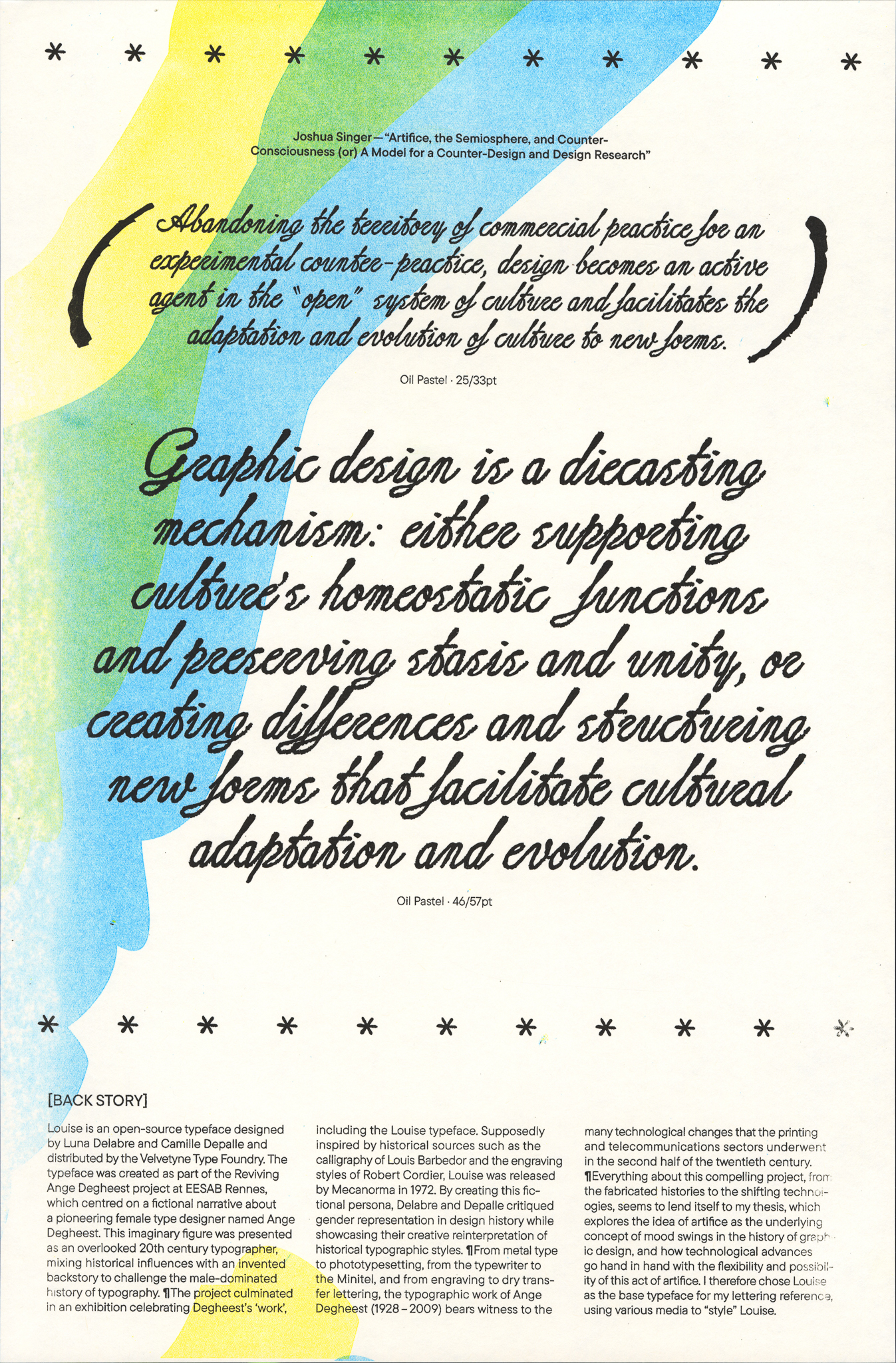
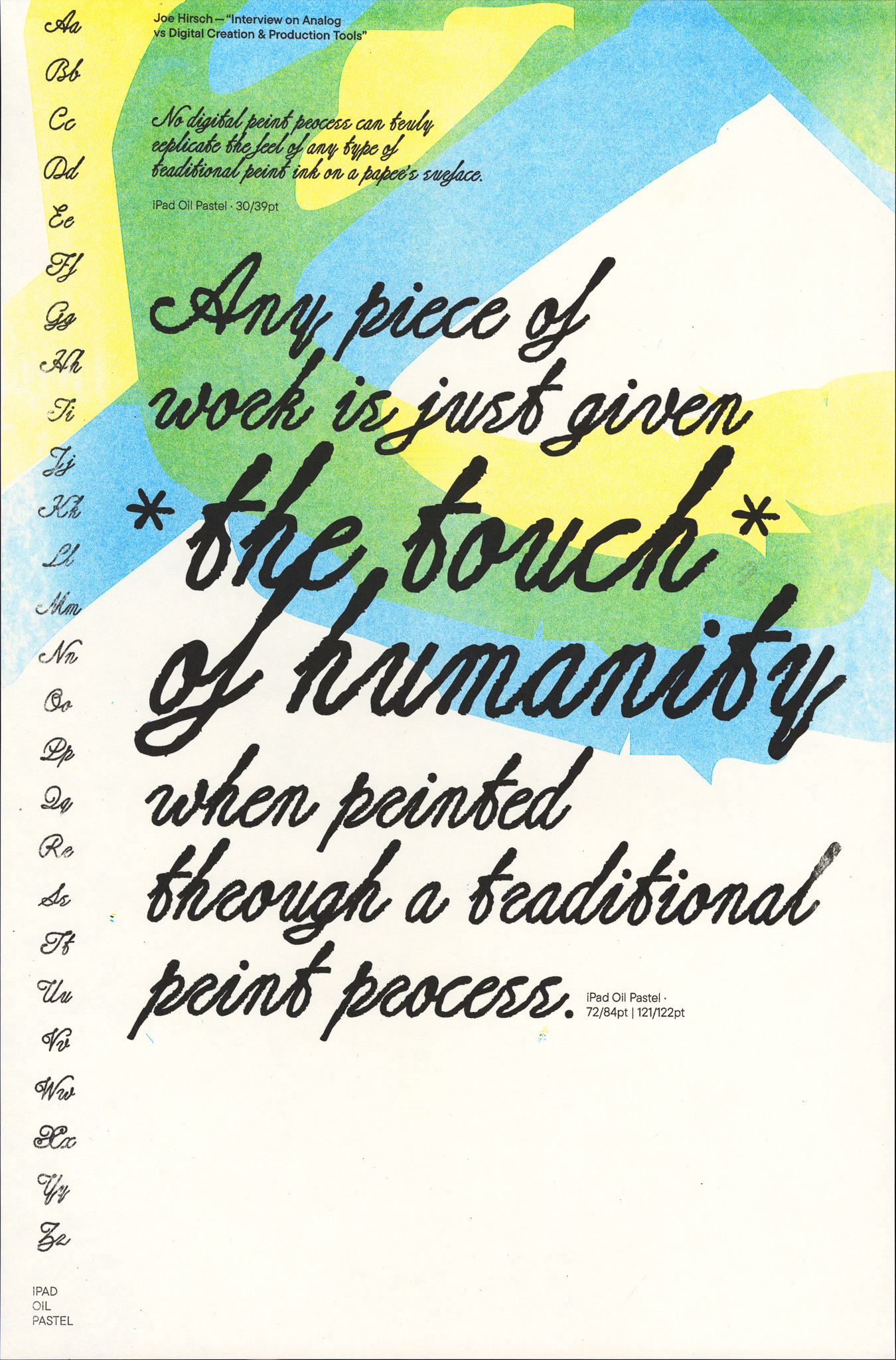
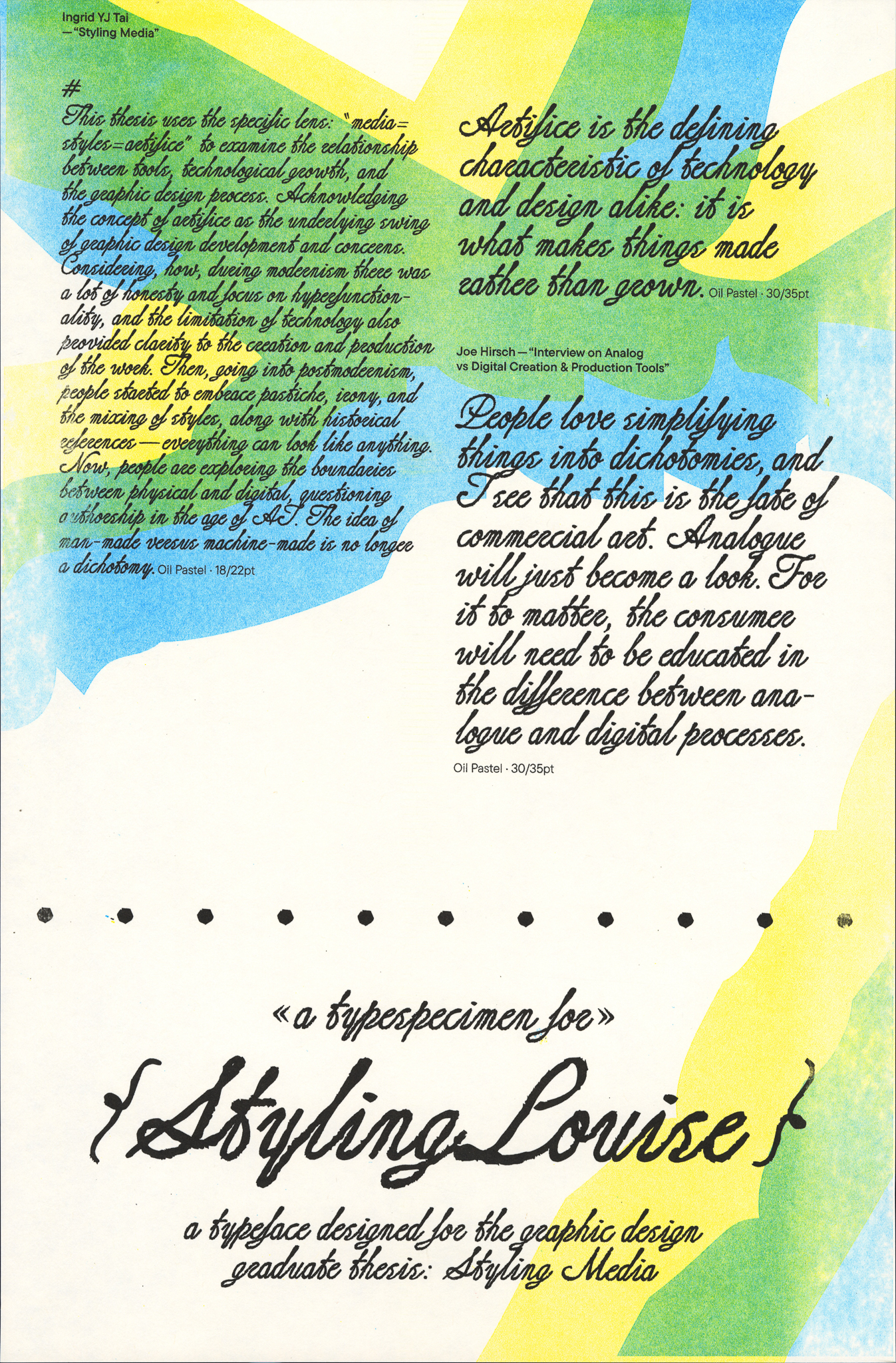
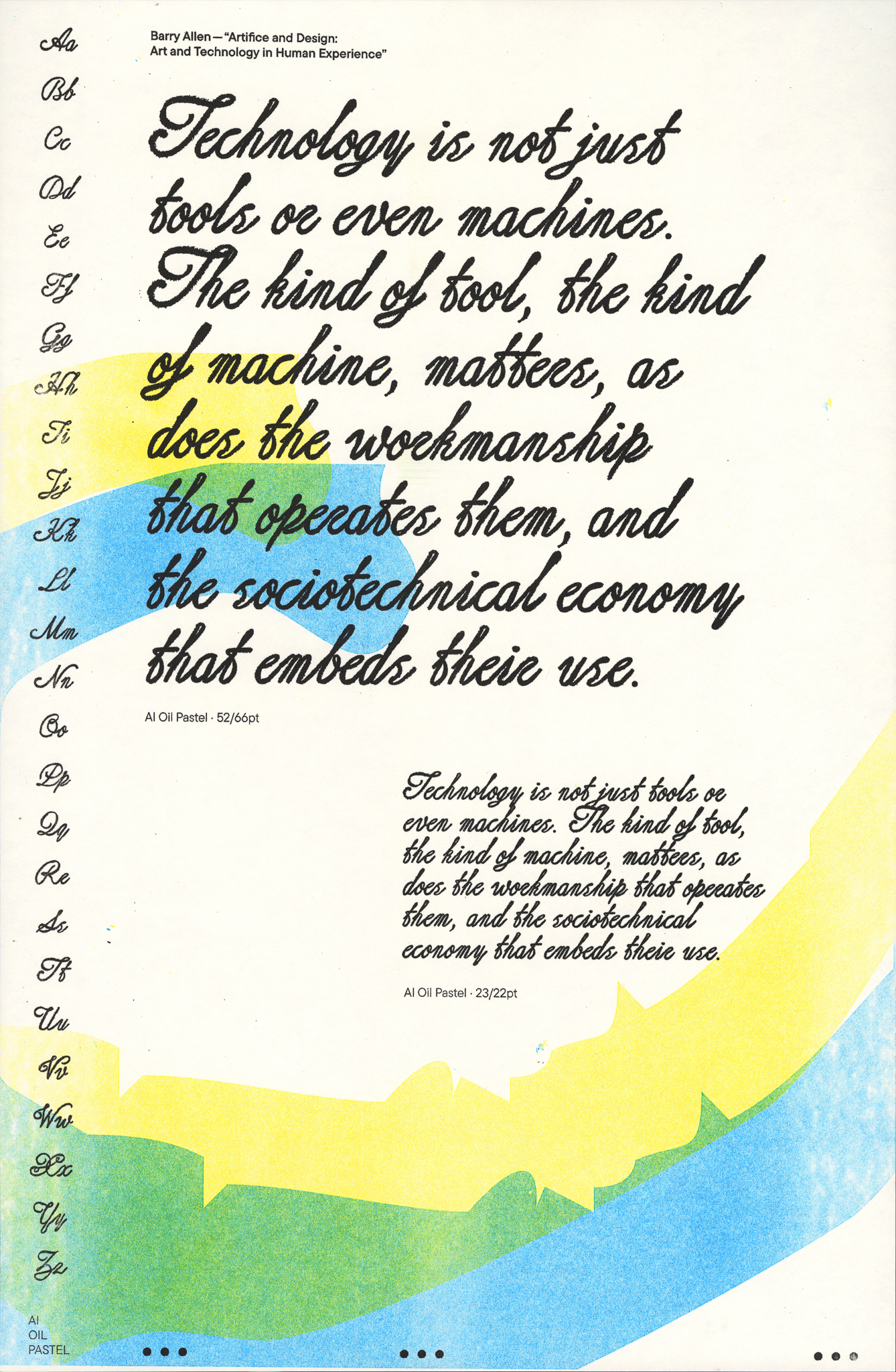
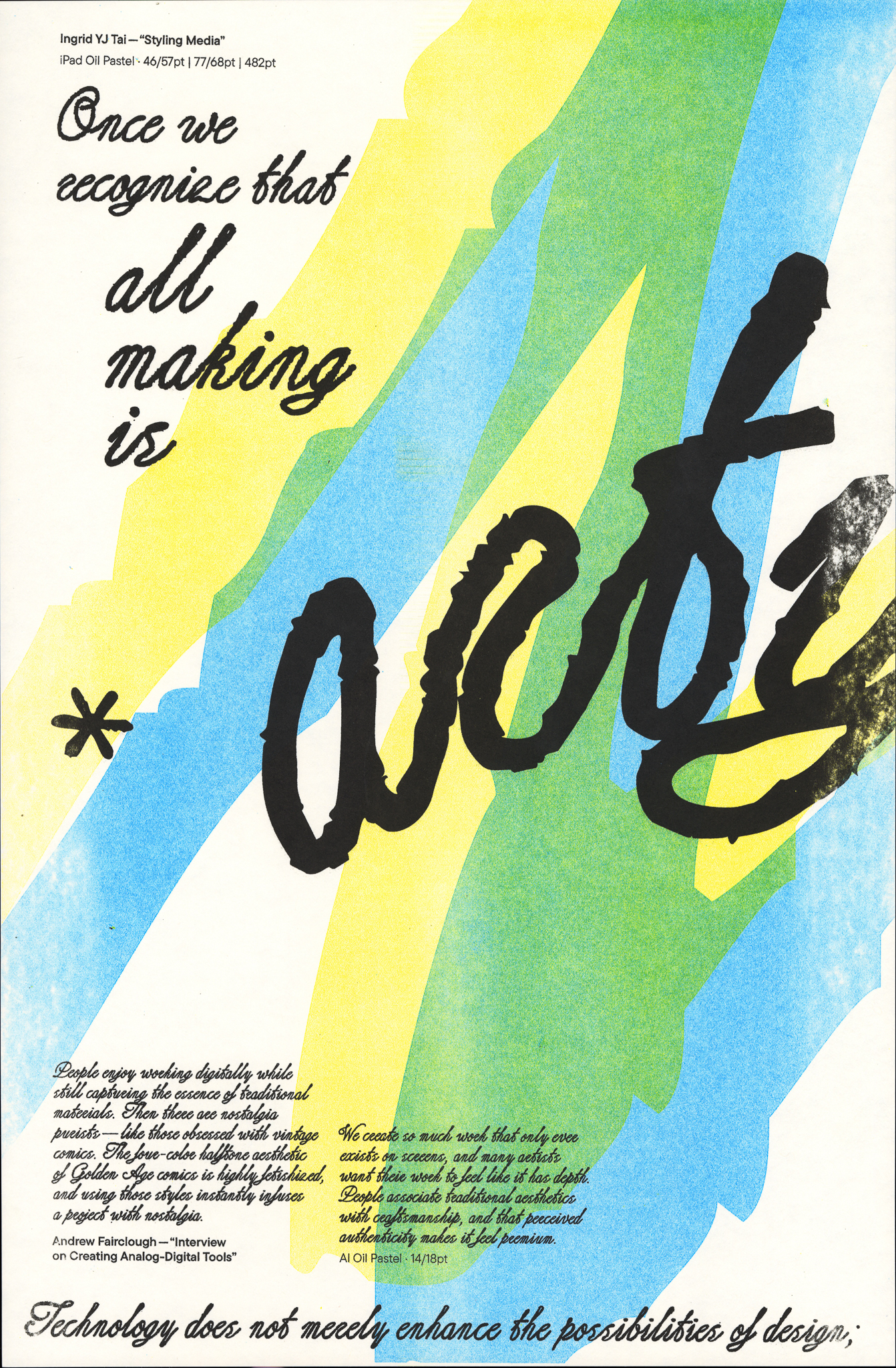
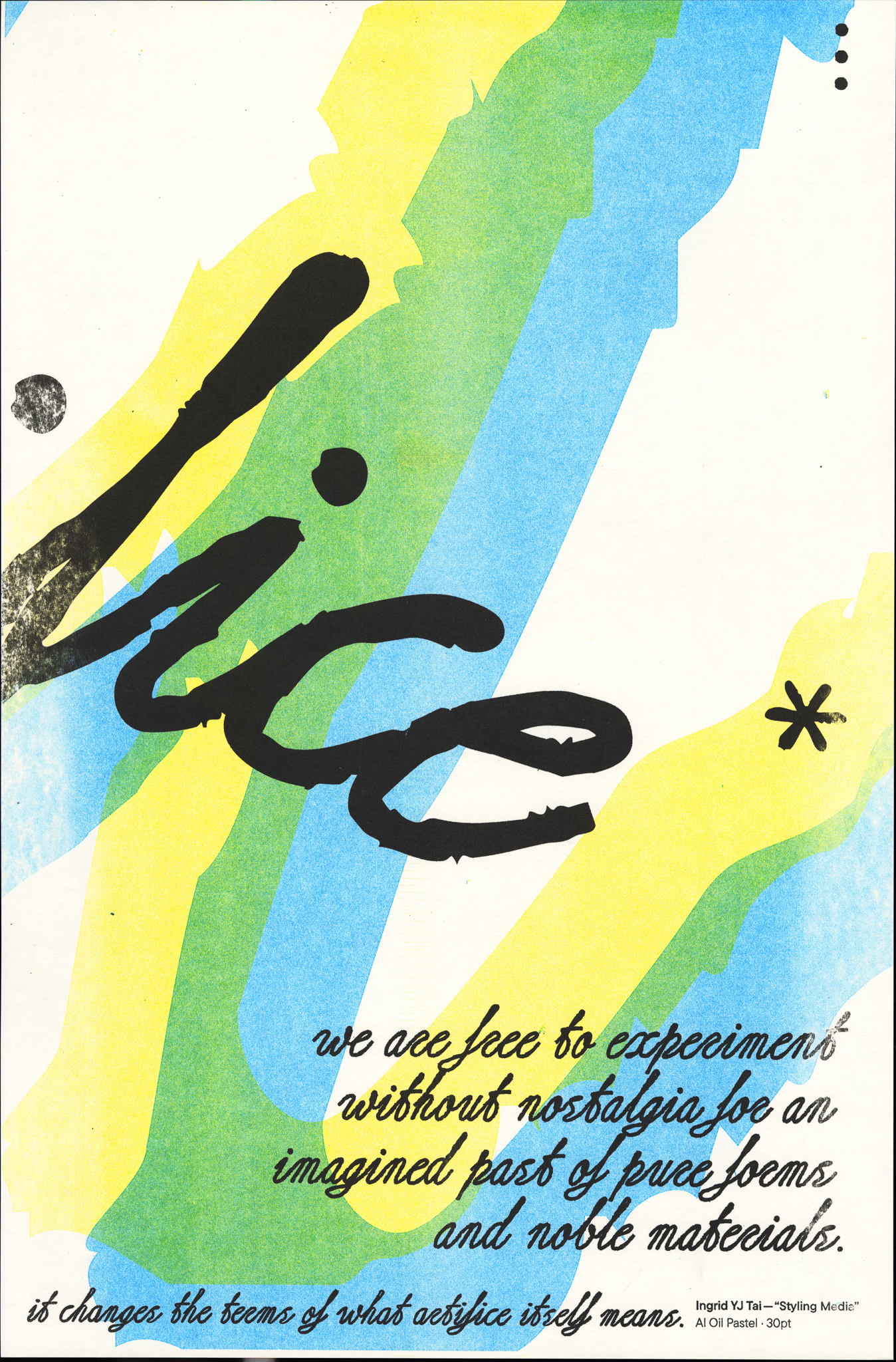
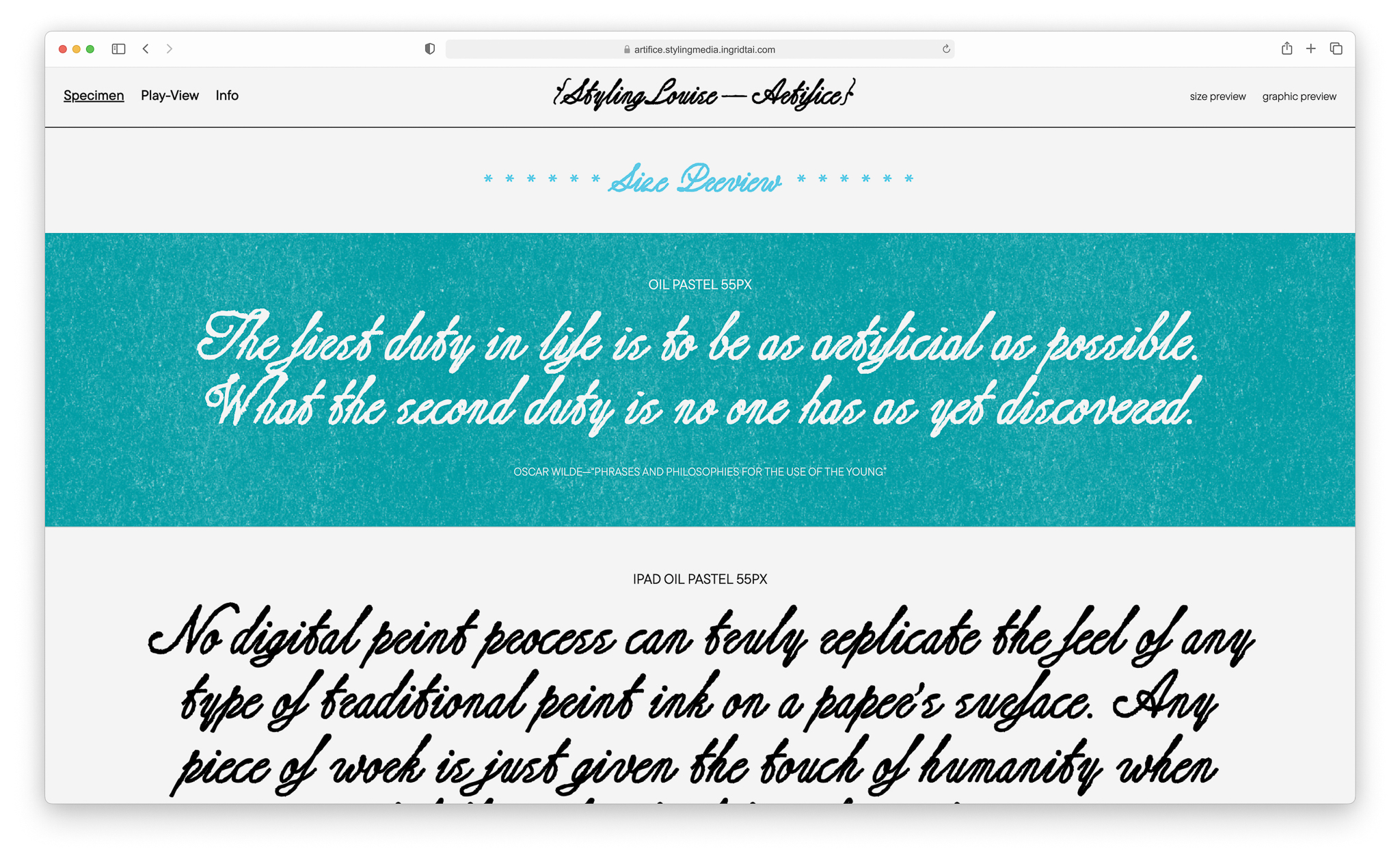
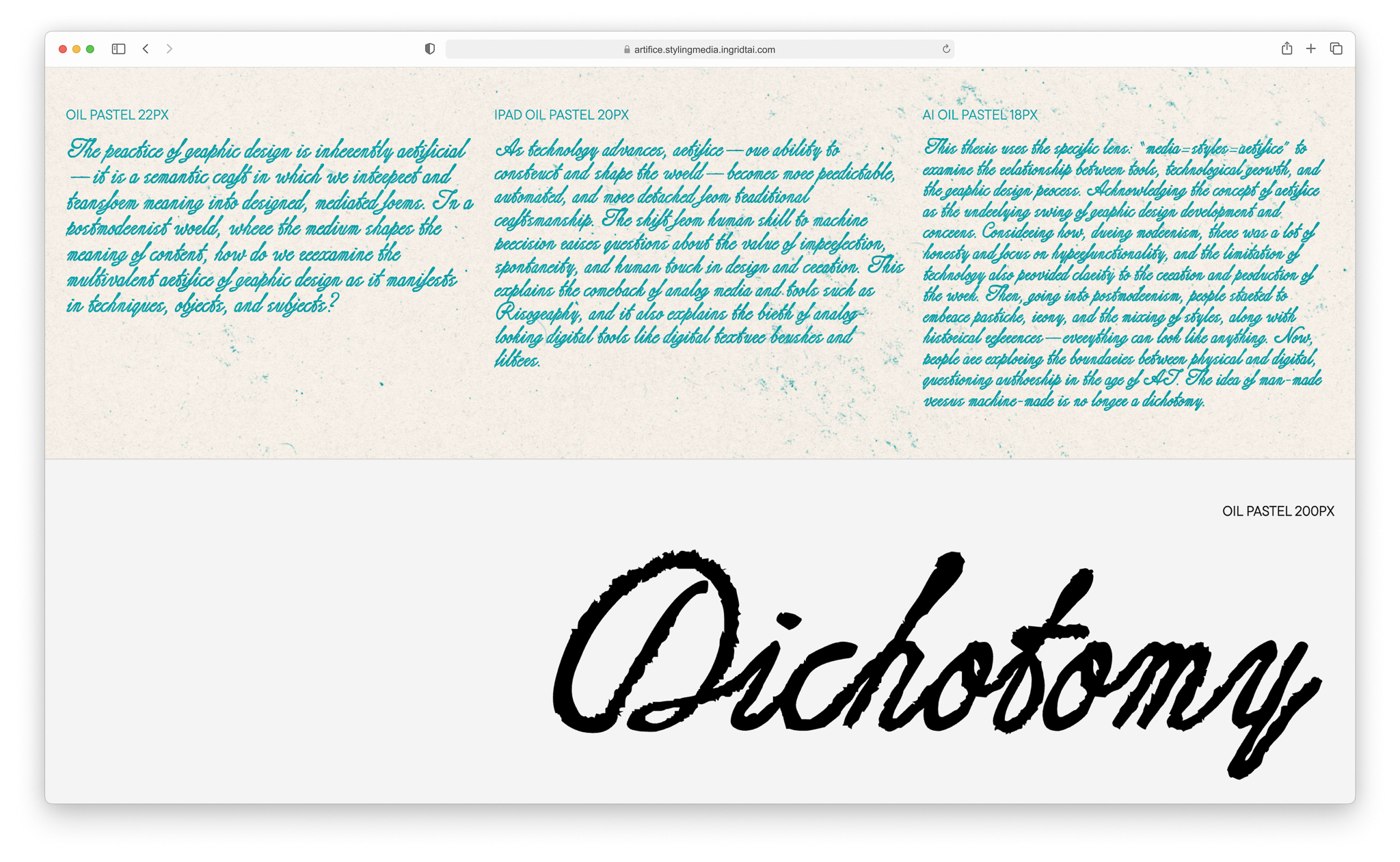
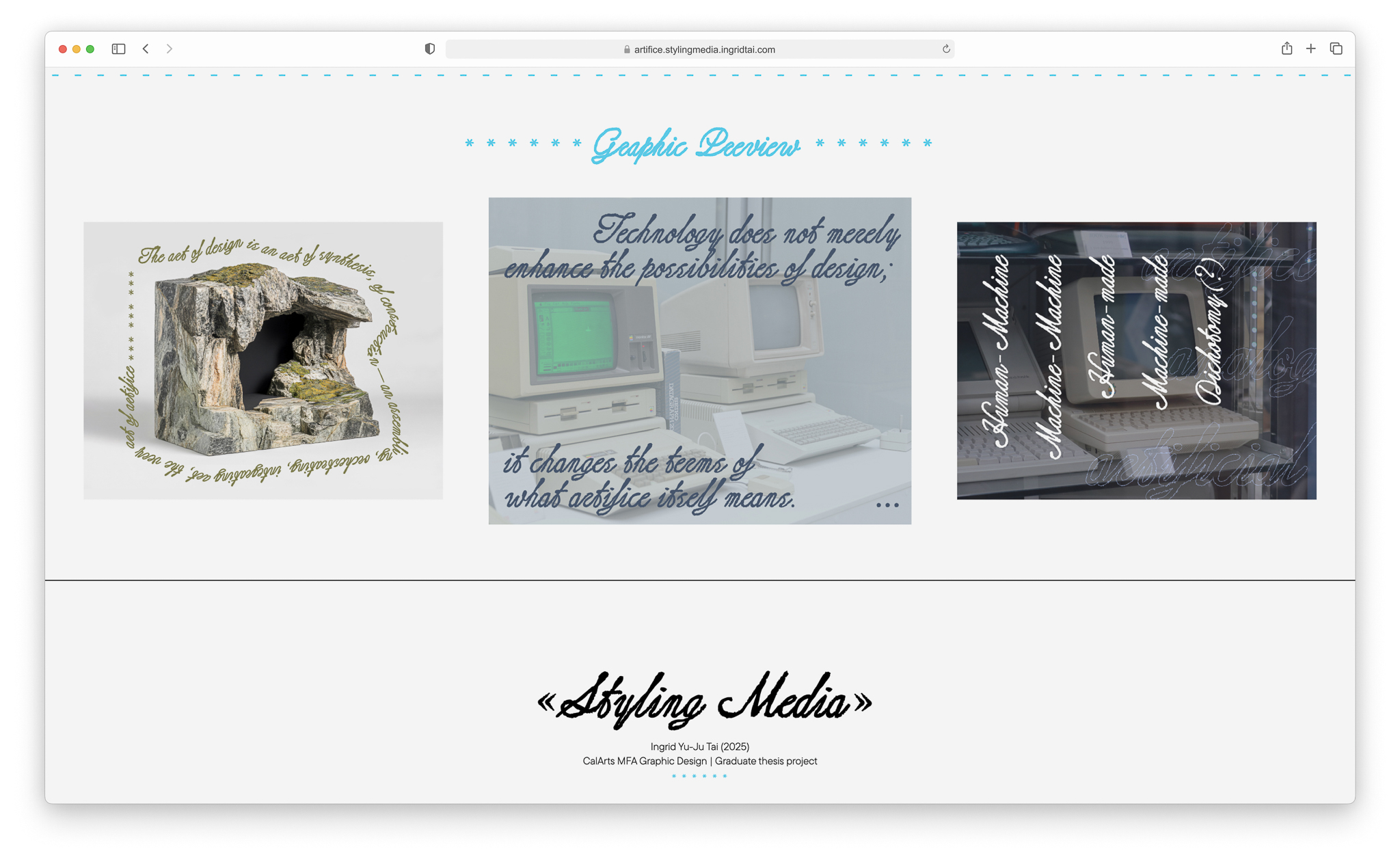
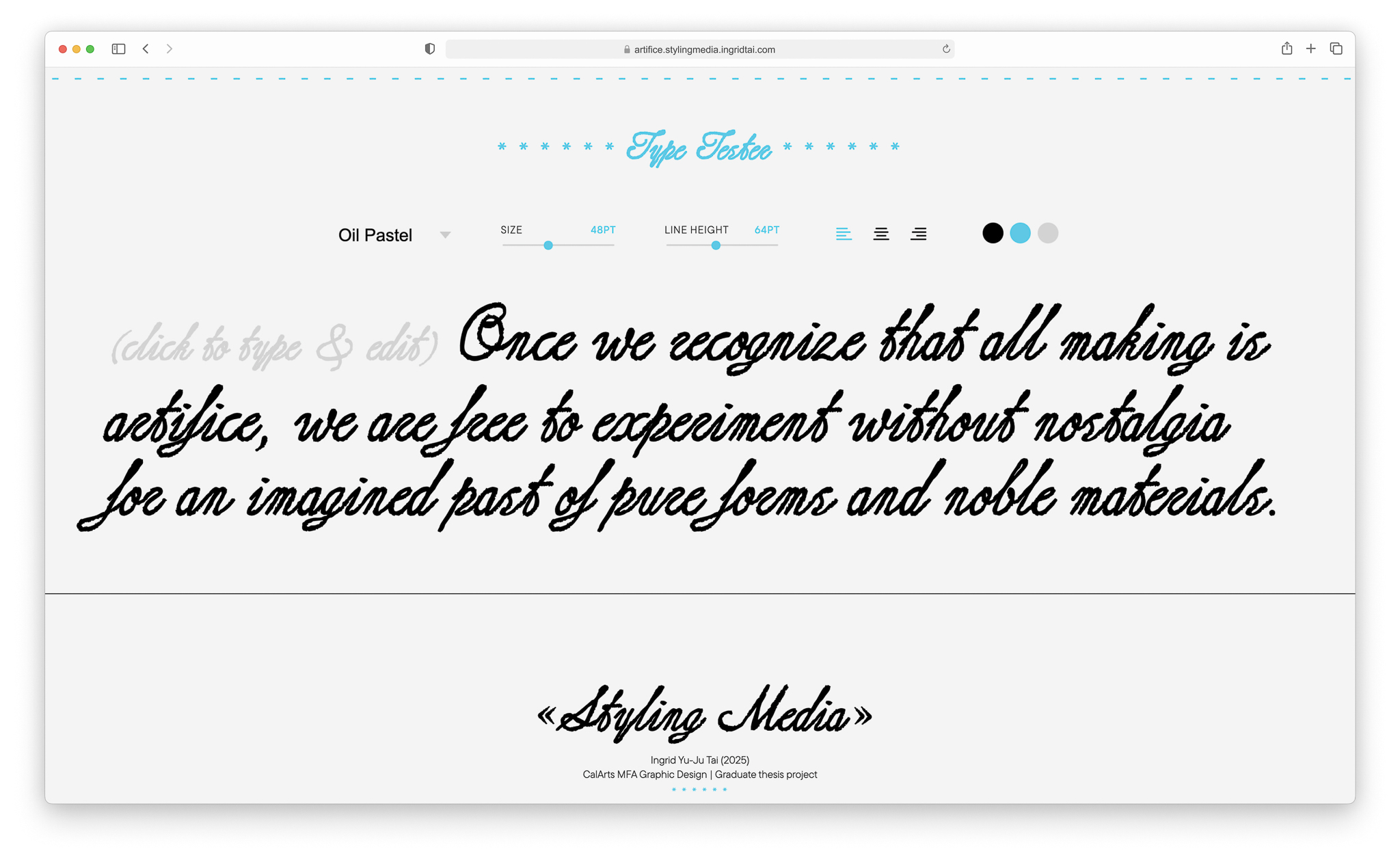
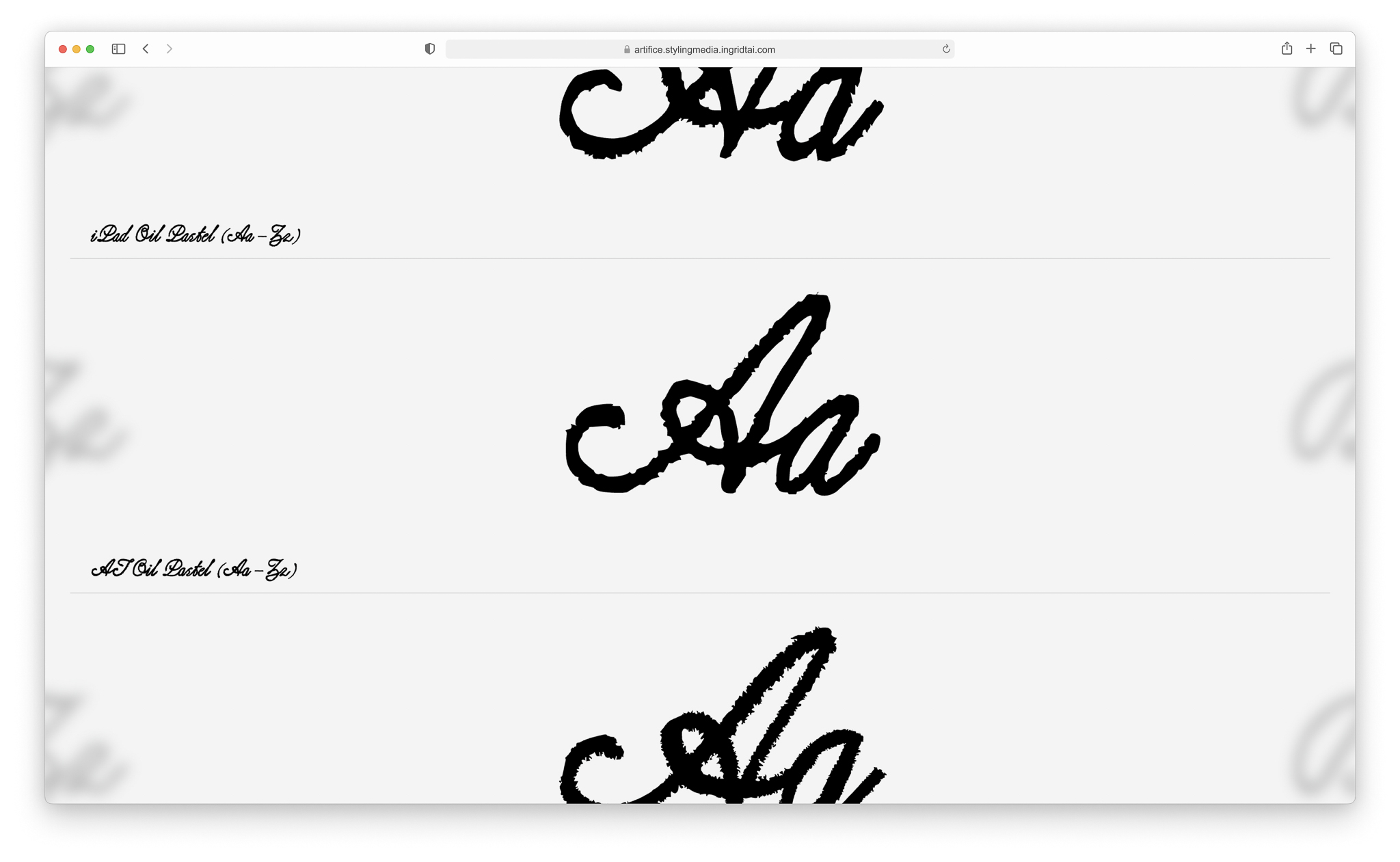
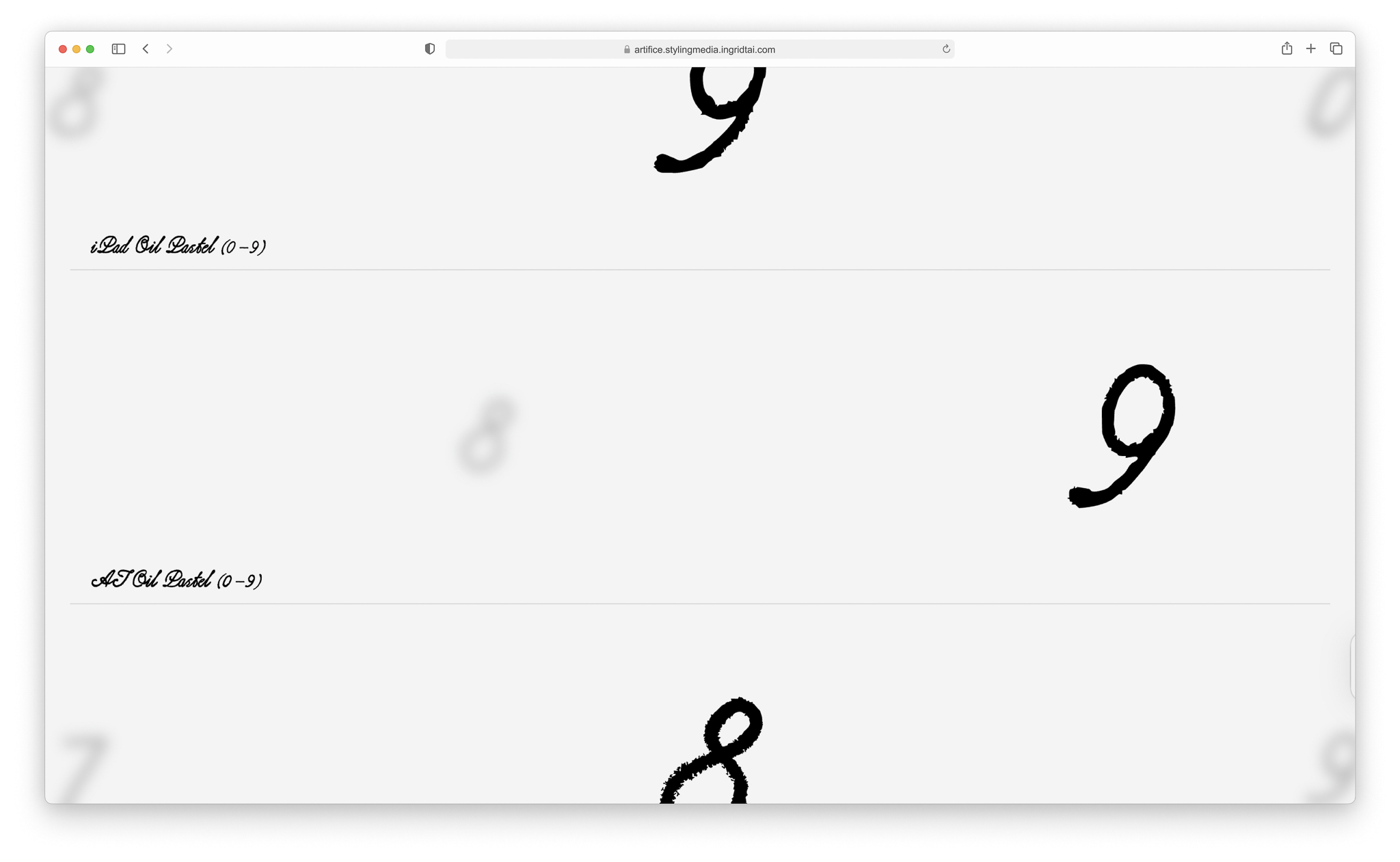
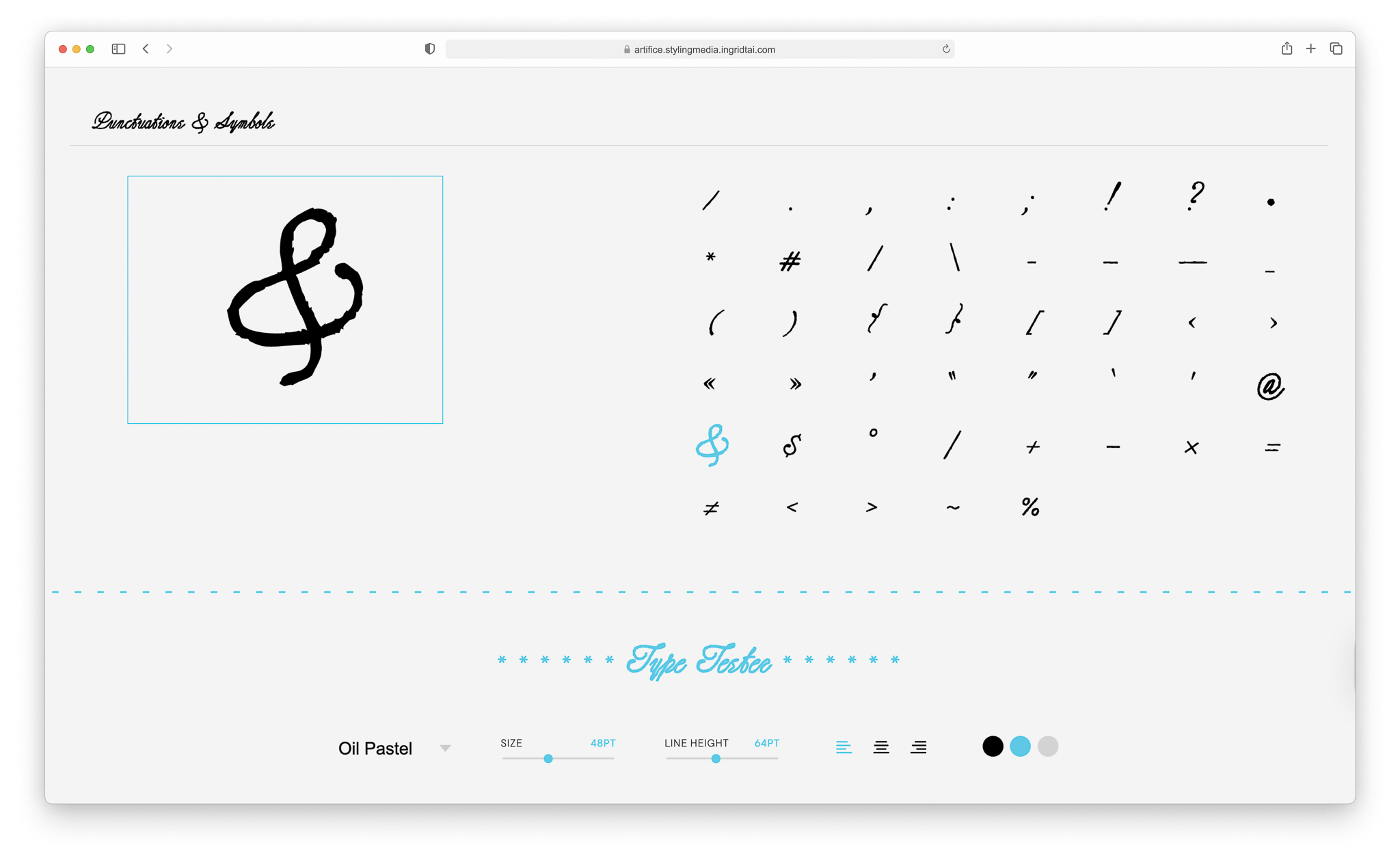
The Artifice portion of the project was a common web-based type specimen that is designed to mimic the analog Risograph aesthetic digitally. This version of the type specimen highlights the editability and interactivity of digital media, allowing viewers to easily explore the typeface in various typesetting styles.
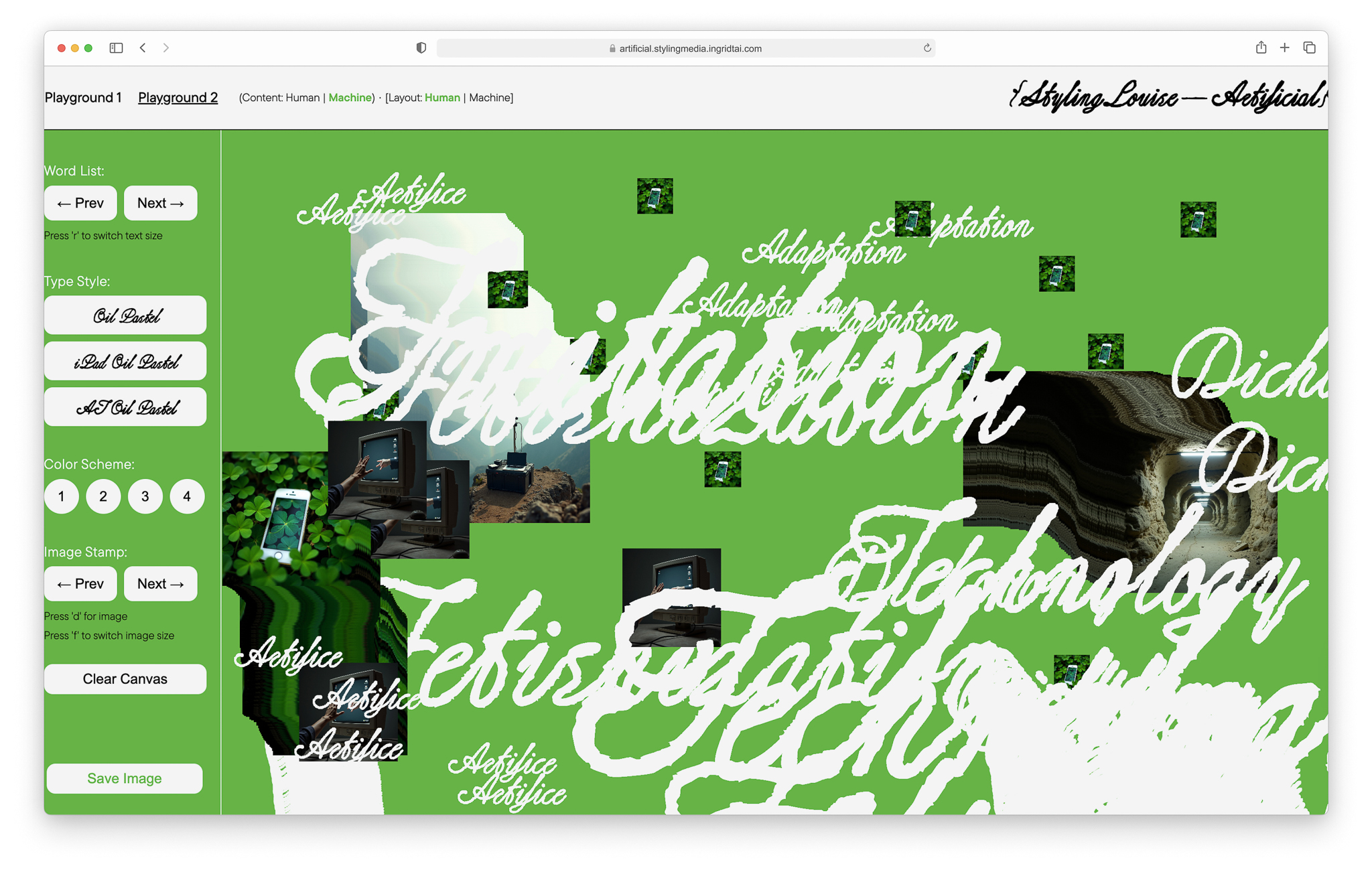
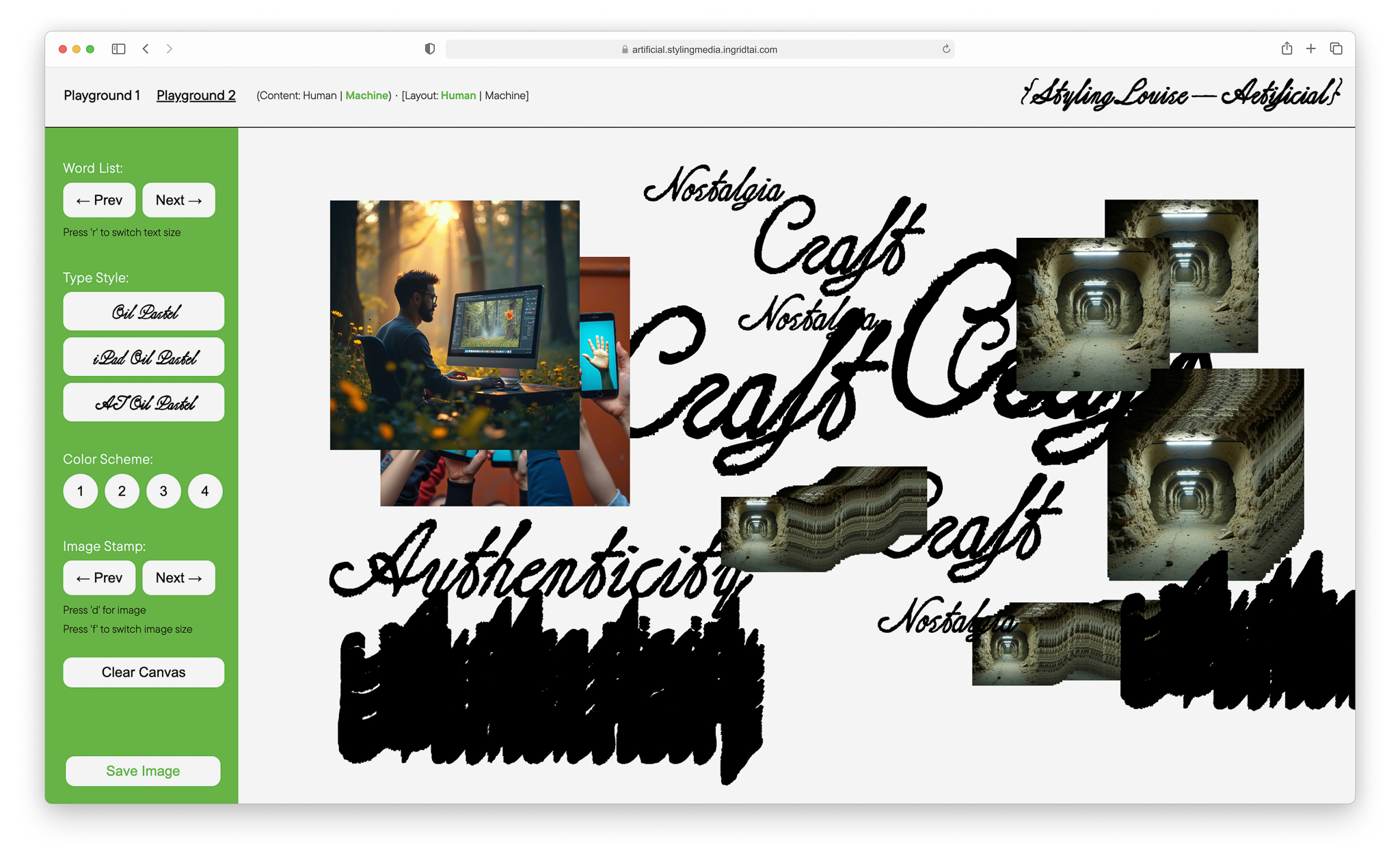
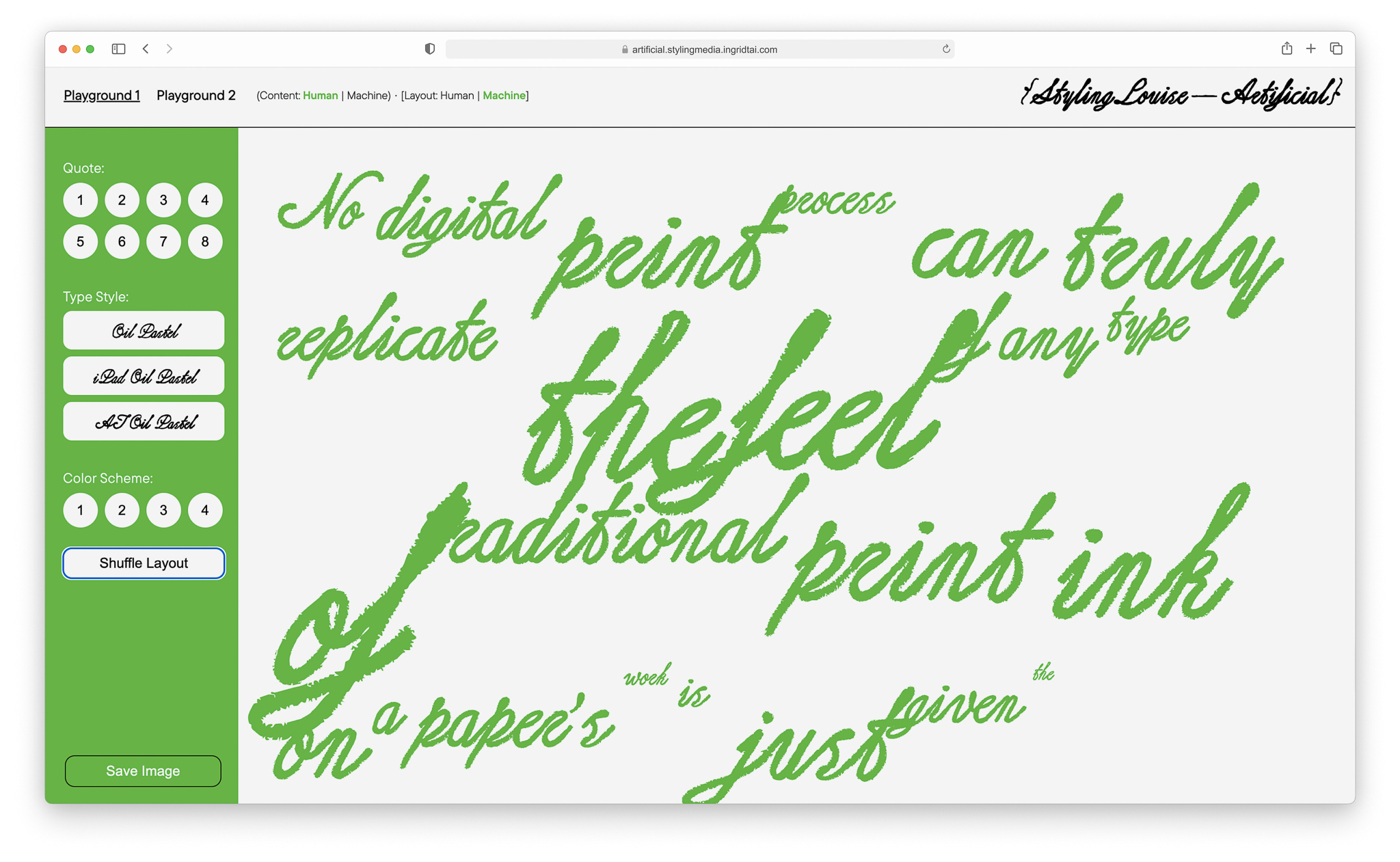
The Artificial portion of the project was a web-based “design tool” that proposed two ways of incorporating artificial elements into the design process without posing total control. The layouts in this tool are generated with creative coding, using random numbers to determine the positions and sizes of each component with a kind of objectivity we humans may never achieve.